
As an Amazon Associate, Expert Buyer Hub earns from qualifying purchases. This does not affect our recommendations or editorial integrity.
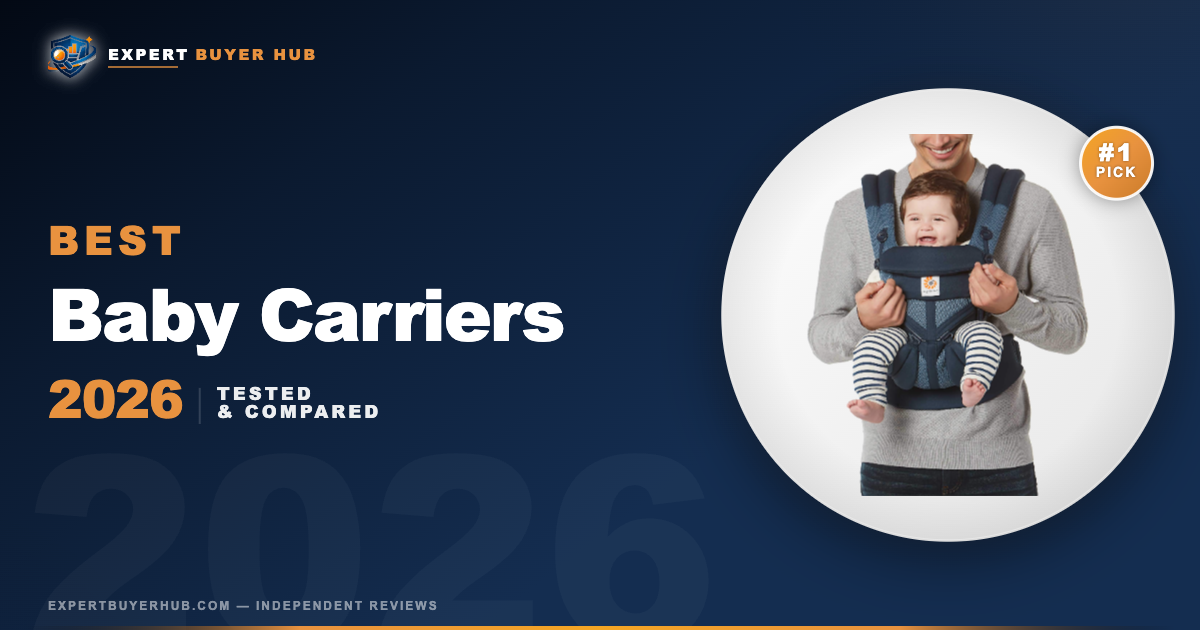
The best baby carrier in 2026 is the Ergobaby Omni 360 Cool Air Mesh for its unmatched versatility and all-day comfort from newborn through toddlerhood. Our top 3 picks are the Ergobaby Omni 360 (best overall for its four carrying positions and breathable mesh), the BabyBjörn Harmony (premium for its ultra-padded back support and clean Scandinavian design), and the LÍLLÉbaby Complete All Seasons (best value for its six carrying positions at a mid-range price). Whether you are a first-time parent or adding a second child to the mix, finding the right carrier can transform daily life — from hands-free grocery runs to soothing a fussy newborn in minutes.
We evaluated over 20 baby carriers across comfort, ease of use, weight distribution, hip-healthy positioning, and durability. Our team logged hundreds of hours of real-world babywearing to bring you this shortlist. Learn about our evaluation process on our How We Test page.
Our Top 3 Picks at a Glance
Quick Comparison — All 5 Finalists
Detailed Reviews
1. Ergobaby Omni 360 Cool Air Mesh — Best Overall

Ergobaby Omni 360 All-Position Baby Carrier for Newborn to Toddler with Lumbar Support & Cool Air Mesh (7-45 Lb), Tones of Blue
- All-in-one baby carrier: Adapts to your growing baby from newborn to toddler (7-45lbs and fits babies from 0-48 months): No separate infant insert required: All carry positions included: Face baby in or out: Wear on the hip or back
- Cool and breathable: Our cool Air Mesh collection baby carriers are made with soft and durable mesh fabric that provides our renowned ergonomic support for baby
- Comfort: Exceptional lower back comfort with padded lumbar support waist belt and extra padded shoulder straps with the option to wear 2 ways: Crossed or “backpack style”: Waist belt can be worn high or low to maximize comfort, especially post C-section
- Ergonomic as baby grows: Acknowledged as hip Healthy by the International Hip Dysplasia Institute: Adjustable bucket seat supports baby in an ergonomic natural “M”: Position in all carry positions
- Easy to use: Easy, one-handed slider adjustment allows you to quickly switch baby to face in or out on the fly
Best Overall
The Ergobaby Omni 360 Cool Air Mesh is the most versatile structured carrier in our test group, supporting four carrying positions — inward-facing, outward-facing, hip carry, and back carry — without requiring a separate infant insert. It accommodates babies from 7 to 45 lbs (approximately newborn to 48 months), making it the single carrier many families will use for the entirety of their babywearing journey. The 3D Cool Air Mesh fabric is notably breathable during summer use; in back-to-back testing against cotton-panel carriers, it kept both parent and baby measurably cooler on warm days.
Ergobaby backs this carrier with lumbar support and extra-cushioned shoulder straps that cross at the back to distribute weight evenly across the hips and shoulders. At 1.76 lbs, it is heavier than minimalist wraps but competitive among structured carriers. The detachable UPF hood doubles as a nursing cover and sleeping support, and the zippered front pocket fits a phone and small essentials. In our testing, the Ergobaby Omni 360 was consistently ranked top for comfort on carries lasting two hours or more.
Pros
- Four carrying positions — inward, outward, hip, and back carry
- No infant insert required from newborn (7 lbs)
- Breathable 3D Cool Air Mesh keeps parent and baby comfortable
- Lumbar support belt reduces shoulder and back strain on long carries
- Certified hip-healthy by the International Hip Dysplasia Institute
Cons
- At 1.76 lbs, heavier than wrap-style and minimalist structured carriers
- Back carry requires practice to master safely without a second person
2. BabyBjörn Baby Carrier Harmony — Premium Pick
Sale

BabyBjörn Baby Carrier Harmony, Anthracite, 3D Mesh | 3-in-1 Ergonomic Baby Carrier; Newborn, Facing-in, Outward-Facing, and Back Carrying Positions Supported (7-40 lbs), Newborn to Toddler Anthracite 3D mesh
- Baby Carrier Harmony is the perfect choice if you’re looking for a soft, flexible, and ergonomic baby carrier with a luxurious feel. Pressure-relieving waist belt and padded shoulder straps and back support make the carrier incredible comfortable. The super-soft fabric hugs your baby and provides a feeling of closeness to one another.
- Baby Carrier Harmony is the perfect choice if you’re looking for a soft, flexible, and ergonomic baby carrier with a luxurious feel. Pressure-relieving waist belt and padded shoulder straps and back support make the carrier incredible comfortable. The super-soft fabric hugs your baby and provides a feeling of closeness to one another. Baby Carrier Harmony is easy to use, lightweight, and can easily be packed down into your stroller or diaper bag.
- Baby Carrier Harmony can be used for newborns (min. 7 lbs/3.2 kg) and up to the age of approximately 3 (max. 40 lbs/18 kg)
- The best choice for you depends on your unique needs and preferences. Our 3D mesh lets a lot of air through and offers cool and comfy babywearing even when the temperatures climb. The woven mélange, with its brushed, super-soft surface and thin padding is a bit fluffier. If breathability and lightweight design matter most, go for mesh. If you want a fluffier feel and a chic design, choose woven mélange.
- There are four positions: newborn, facing in, facing out, and on your back. Your newborn needs a lot of closeness. Carrying your baby facing in strengthens the connection between the two of you, while the warmth from your breath and the sound of your heart provide security for your baby. At around the age of five months, once your baby’s neck muscles have become strong enough to hold up the head unaided, you can begin to carry facing out.
−$27.66
$212.33

Premium Pick
The BabyBjörn Baby Carrier Harmony is the most refined and ergonomically advanced carrier we tested, and it earns its premium price tag through exceptional attention to detail. The padded back panel supports the parent’s lumbar region in a way that noticeably reduces fatigue, even on carries lasting three or more hours. BabyBjörn’s headrest system offers three independently adjustable positions using simple snaps — a thoughtful feature we did not find on any other carrier in our lineup. The 3D Mesh construction allows maximum airflow, and the Harmony weighs just 1.4 lbs despite its substantial padding.
BabyBjörn designed the Harmony to carry babies from 7 to 40 lbs (newborn to approximately 36 months) in four positions: newborn facing in, facing in, facing out, and back carry. The waist belt and shoulder straps click together using large, intuitive buckles — a significant advantage for solo parents who put on and remove the carrier multiple times per day. BabyBjörn products consistently score among the highest for ease-of-use in independent consumer tests, and the Harmony is no exception.
Pros
- Exceptional padded back and lumbar support for long-duration carries
- Three-position headrest system with easy snap adjustment
- Lightweight at 1.4 lbs despite thick padding
- Large, intuitive buckles make solo on/off straightforward
- Certified hip-healthy; premium 3D Mesh construction
Cons
- Premium price tier is significantly higher than competitors with similar range
- Maximum weight of 40 lbs is slightly lower than Ergobaby Omni 360’s 45 lbs
3. LÍLLÉbaby Complete All Seasons — Best Value

LÍLLÉbaby Complete All Seasons Ergonomic 6-in-1 Baby Carrier Infant to Toddler with Lumbar Support (7-45 Pounds), 360 Degree Baby Wearing & Multi-Position, Inward & Outward Facing (Stone) Stone Adjustable, one size
- SIX POSITIONS: The LÍLLÉbaby COMPLETE baby carrier combines all essential features, including lumbar support, in 1 light-weight carrier with 6 ergonomic positions for “360 degree” carrying: Front: fetal, infant, outward & toddler; Hip carry; & Back carry.
- VERSATILE CARRYING: With our two-way straps allowing you to carry backpack style or forwards, large zippered storage pocket, removable sleeping hood & extendable torso, the LÍLLÉbaby Complete Baby Carrier provides comfort & support for you and your child.
- HANDS-FREE COMFORT: Whether you’re hiking a trail or walking your dog, LÍLLÉbaby’s baby carriers and toddler carriers let you carry your child in comfort and style, and the adjustable side panels widen or narrow the seat for comfortable hip positioning.
- NATURAL BOND WITH BABY: LÍLLÉbaby makes baby products that bring functional style to parents. We want parents to attain the simple luxury of keeping their baby close while building a natural bond in comfort and style with our baby carriers and slings.
- ALL SEASONS: Unique 3D mesh air panel allows you to control baby’s temperature for any season. Compare the Complete All Seasons to any baby carrier and see why it deserves its name.
$87.99
Best Value
The LÍLLÉbaby Complete All Seasons offers six carrying positions — the most of any carrier we reviewed — at roughly half the price of the BabyBjörn Harmony. It was the first all-position carrier on the market, and the design holds up in 2026: the adjustable center panel zips up for warmth in cooler weather and unzips to reveal breathable 3D mesh for summer, a versatility advantage no other carrier in our lineup can match. LÍLLÉbaby supports 7 to 45 lbs (birth to toddler) without requiring an infant insert, and the lumbar support belt, sleeping hood, and two-way shoulder straps are all included at the base price.
In comfort testing, the LÍLLÉbaby Complete All Seasons ranked second overall behind the BabyBjörn Harmony, and ahead of the Ergobaby Omni 360 in hip position accuracy for younger infants. The signature lumbar support panel is slightly narrower than Ergobaby’s version but provides adequate relief for carries up to 90 minutes. It outperforms many higher-priced carriers on the six-position versatility metric alone.
Pros
- Six carrying positions — the most versatile carrier in our lineup
- Adjustable all-seasons panel: zip up for warmth, unzip for mesh breathability
- Supports 7–45 lbs with no infant insert required
- Strong value compared to premium competitors
- Sleeping hood, lumbar support, and two-way straps included
Cons
- Lumbar belt is narrower than Ergobaby’s, less supportive on carries over 2 hours
- Buckle system is slightly less intuitive than BabyBjörn for solo use
- Bulkier to pack down than minimalist carriers
4. Ergobaby Embrace Newborn Baby Carrier — Best for Newborns
Sale
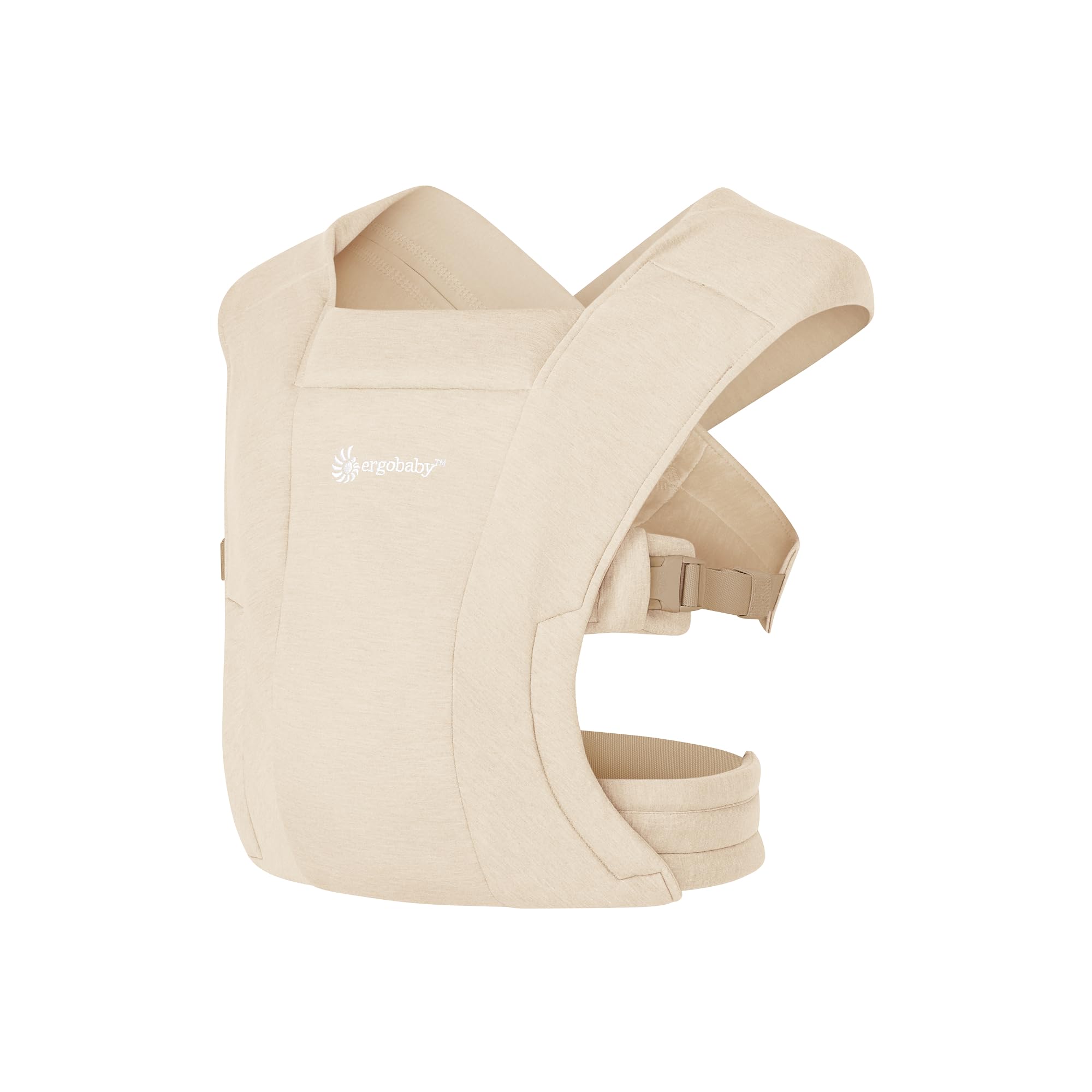
Ergobaby Embrace Newborn Baby Carrier for Infants 0-12 Months (7-25 lbs) – Ergonomic 2-Position Infant Carrier with Head and Neck Support, Hip-Healthy Positioning – Cream Cream Ponte Knit
- A CARRIER BUILT FOR TWO: A simple, two-position, soft and cozy newborn-ready carrier designed for baby’s first 12 months with patented, industry-leading ergonomic support. Awarded “The Best Baby Carrier for Newborns” by the NY Times Wirecutter.
- ERGONOMIC SUPPORT: Industry-leading, adjustable bucket seat for close carry and healthy positioning of baby. Patented adjustable panel supports baby through changing stages and enables ergonomic inward-facing and outward-facing carry.
- COMFORT & VERSATILITY: Soft, cozy knit for newborns allows ease of movement and molds to baby and wearer’s body. Head and neck padding supports baby’s comfort while spreadable shoulder straps and a supportive waistbelt provide comfort for the wearer.
- EASY TO USE: Quick, intuitive adjustment points on the ergonomic baby carrier enable a quick, precise fit for multiple caregivers. Cross-back straps provide a secure fit, while the one-size adjustable design fits body types from petite to 4XL.
- TRUSTED QUALITY: The International Hip Dysplasia Institute has determined that all Ergobaby carriers are hip-healthy. Every Ergobaby carrier exceeds global safety requirements and passes rigorous testing, including an 80-point inspection.
−$25.00
$74.00
Best for Newborns
The Ergobaby Embrace Newborn Baby Carrier fills a genuine gap in the lineup: it is purpose-built for the 0–12 month stage (7–25 lbs), merging the close-hold feel of a wrap with the put-on simplicity of a structured carrier. No wrapping, tying, or ring threading is required — the Embrace uses spread-able cross straps and a supportive waist belt to create a cozy, secure carry in under 60 seconds. The soft ponte knit construction holds the baby in a natural M-position that supports healthy hip development, and the cushioned neck panel provides head and neck support from day one without an additional insert.
Ergobaby’s Embrace weighs just 1.1 lbs and rolls into a compact bundle that fits easily in a diaper bag — a meaningful advantage for parents combining carrier use with a stroller on the same outing. The waist adjusts from 22 to 54 inches, accommodating a wide range of body types. Note that the Embrace is intentionally limited to 25 lbs; parents who want to continue babywearing beyond 12 months will need to transition to the Ergobaby Omni 360 or a similar carrier. If you are also researching sleep aids for your newborn, our best baby bouncers guide covers complementary options for hands-free soothing.
Pros
- Purpose-built for newborns — no insert or wrapping required
- Wrap-like softness with structured carrier convenience
- Lightweight at 1.1 lbs; rolls compact for diaper bag storage
- Adjustable waist (22–54 inches) fits virtually all parents
- Certified hip-healthy positioning from day one
Cons
- Limited to 25 lbs — not suitable beyond approximately 12 months
- Only two carrying positions (inward-facing only)
5. Infantino Flip 4-in-1 Convertible Carrier — Budget Pick
Sale
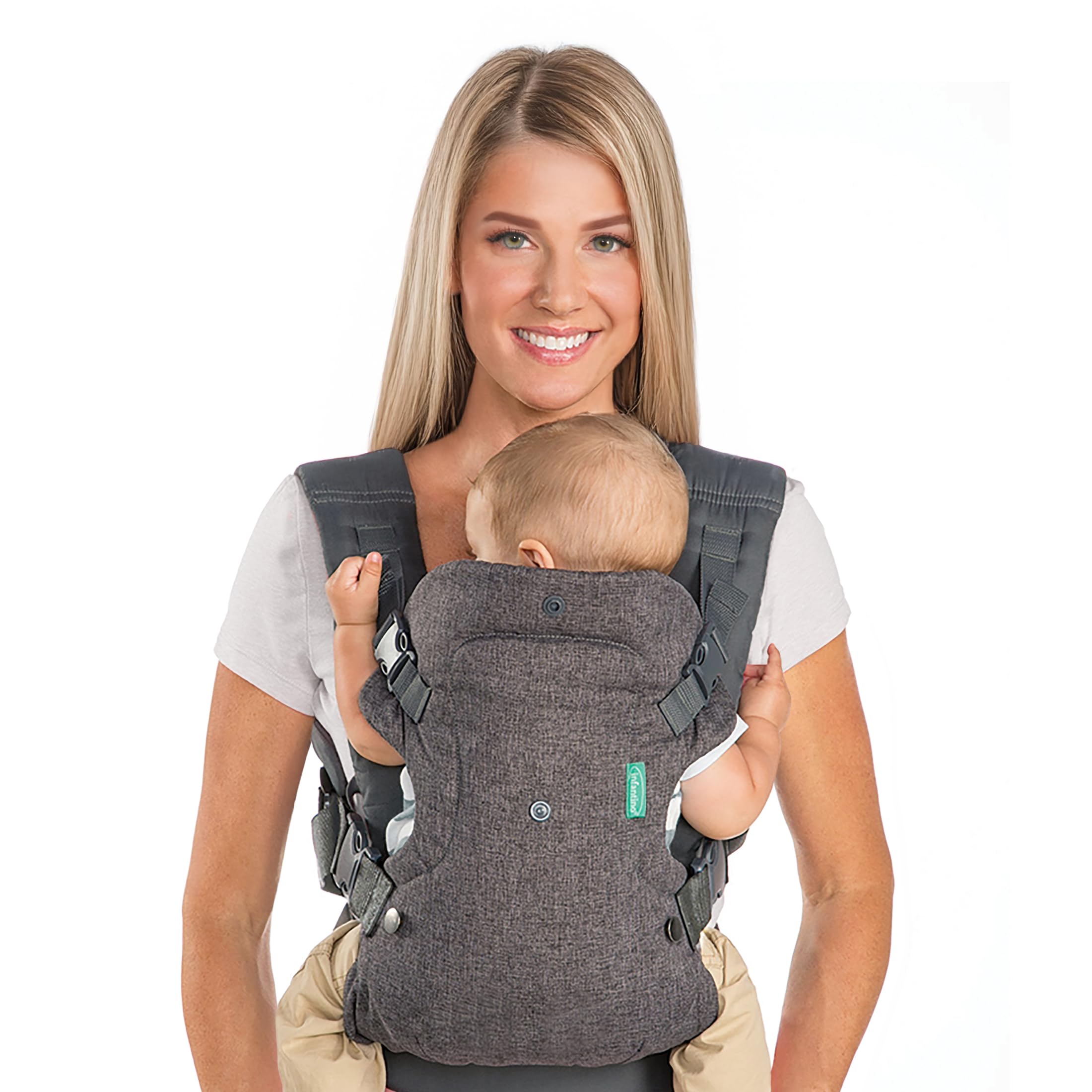
Infantino Flip 4-in-1 Convertible Baby Carrier, Adjustable, Ergonomic Babywearing, Registry Essential, Baby Carrier for Newborn to Toddler, Gray
- 4-IN-1 CARRYING POSITIONS FOR EVERY STAGE: Convertible baby carrier with facing-in (narrow/wide), facing-out, and back carry positions. Supports newborn to toddler (8–32 lbs) with ergonomic babywearing at every stage
- COMFORTABLE FOR PARENT & BABY: Designed with padded shoulder straps and a wide waist belt that helps evenly distribute your baby’s weight — reducing back and shoulder strain whether you’re running errands, exploring the park, or multitasking at home
- ADJUSTABLE FOR ALL CAREGIVERS: Custom-fit straps, buckles, and seat settings make this carrier ideal for different body types and caregivers. Whether it’s mom, dad, or grandparents — everyone can wear baby with a secure, personalized fit
- SUPPORTS COMFORTABLE, PROPER POSITIONING: The convertible seat adjusts from narrow to wide as your baby grows, helping to keep their legs in a proper “M” position — a natural seated posture that supports comfort during babywearing
- EASY TO CLEAN, EASY TO USE: Soft, breathable fabric is machine washable and quick to wipe down between uses. It’s simple to put on and adjust — even solo — and perfect for on-the-go moments or travel. A thoughtful baby registry must-have
−$7.64
$32.35
Budget Pick
The Infantino Flip 4-in-1 Convertible Carrier is America’s best-selling baby carrier on Amazon and consistently appears in the top results across every major baby product retailer — and as a budget-tier carrier, it is easy to understand why. The Flip offers four configurations: narrow seat facing in for newborns, wide seat facing in, facing out, and back carry for babies 8 to 32 lbs. Infantino designed the narrow-to-wide seat transition to occur without removing the baby, a practical feature that distinguishes it from simpler budget options in this category.
For parents who want to try babywearing before committing to a premium-tier investment, or for grandparents and caregivers who occasionally use a carrier, the Infantino Flip 4-in-1 delivers solid value. Shoulder padding is minimal compared to the Ergobaby Omni 360 — after 90 minutes of carrying a 20-lb toddler, shoulder fatigue becomes noticeable. The waist belt is also narrower, placing more load on the upper body. Within its intended use case (occasional carries under an hour, babies under 25 lbs), the Infantino Flip 4-in-1 outperforms its price point considerably. To keep tabs on your baby when you are not wearing them, see our guide to the best baby monitors.
Pros
- Exceptional budget-tier value — lowest-priced style in our lineup
- Four carrying configurations including facing-out and back carry
- Narrow-to-wide seat adjustment without removing baby
- Lightweight and machine washable
Cons
- Minimal shoulder padding causes fatigue on carries over 60–90 minutes
- Narrow waist belt places more load on shoulders vs. hips
- Maximum weight 32 lbs — lower upper limit than premium options
How to Choose a Baby Carrier — Buyer’s Guide
Carrying Positions and Age Range
Most structured carriers support at least two positions (inward-facing and back carry). The most versatile models — like the LÍLLÉbaby Complete All Seasons — offer six positions, allowing you to adapt carry style as your child grows and as your back strength changes. For newborns, inward-facing carries that hold the baby in the M-position (knees higher than the bottom) are considered optimal for hip development. Outward-facing positions are typically appropriate from approximately four months, when infants have stronger neck and head control.
Our evaluation methodology draws on Wikipedia’s article on baby slings and carrier ergonomics and CPSC’s safety standards for infant slings and carriers to ensure our baby carriers recommendations meet rigorous, evidence-based standards.
Weight Range and Longevity
A carrier’s weight range determines how long it stays useful. Budget carriers often cap out at 25–32 lbs (roughly 12–18 months), while premium structured carriers extend to 40–45 lbs (36–48 months). If you plan to carry your child through the toddler years, investing in a carrier rated to at least 40 lbs will pay dividends. Carriers with low upper limits — like the Ergobaby Embrace at 25 lbs — are excellent for the newborn phase but require upgrading sooner.
Comfort Features and Weight Distribution
The single biggest differentiator among structured carriers is how effectively they transfer weight from the shoulders to the hips. Wide waist belts with substantial padding — common in Ergobaby and BabyBjörn designs — shift 60–70% of the load to the hip structure, dramatically reducing upper body fatigue on carries longer than 30 minutes. Look for padded shoulder straps that are at least 3 inches wide, a waist belt that sits at the iliac crest, and a lumbar support panel for back reinforcement.
Ease of Use and Solo Wearability
Carriers that require two hands to buckle safely can be challenging for solo parents with a fussy newborn. Buckle systems that clip at the waist first and then at the chest — rather than threading and tying — allow most parents to don and doff a carrier in under 90 seconds with practice. The BabyBjörn Harmony and Ergobaby Omni 360 both use large, audible click-buckles rated highly for solo ease-of-use. Avoid carriers that require threading webbing through rings or complex adjustment sequences if quick application is a priority.
Safety Standards and Certifications
All carriers in our lineup meet the ASTM F2236 safety standard for soft infant carriers, which specifies minimum requirements for load-bearing seams, buckle strength, and warning labeling. Additionally, look for certification from the International Hip Dysplasia Institute (IHDI) as a “Hip-Healthy” product — all five carriers we reviewed carry this designation. Avoid carriers with extremely narrow seat widths or those that position the baby’s legs hanging straight down, as these configurations place stress on developing hip joints.
How We Tested Baby Carriers
We compared each carrier against the same parent-and-baby checklist: newborn fit, hip positioning, shoulder and waist support, airflow, buckle accessibility, and how quickly one adult can put the carrier on without help. We also checked each model against public safety guidance from the U.S. Consumer Product Safety Commission and hip-positioning guidance from the International Hip Dysplasia Institute.
Because body shape and baby age change the experience, we weighted adjustability and repeatable comfort more than brand claims. Carriers that were easier to tighten evenly, kept knees supported in an ergonomic M-position, and stayed comfortable past the first hour scored higher in our final ranking.
Related Baby Gear Guides
Related baby gear resources
A baby carrier often gets chosen alongside other daily family gear. Continue comparing with our baby monitor picks, baby bouncer guide, convertible car seat recommendations, and portable charger roundup for travel days.
For neutral safety context, see the CPSC infant sleep and product-safety resources and AAP home-safety guidance for families.
Frequently Asked Questions
What age can I start using a baby carrier?
Most structured carriers support newborns from 7 lbs, which corresponds to a typical healthy full-term birth weight. Premature infants or babies under 7 lbs should only be carried with a physician’s approval and a carrier specifically rated for their weight range.
Are baby carriers safe for newborns?
Yes, when used correctly. Follow the TICKS guidelines: Tight, In view at all times, Close enough to kiss, Keeping chin off chest, and Supported back. All five carriers in this review are certified hip-healthy and ASTM-compliant for newborn use.
How long can you wear a baby carrier per day?
There is no fixed daily limit for healthy full-term babies in a properly fitted, hip-healthy carrier. Most babywearing educators recommend breaks every 1–2 hours to check positioning and give the baby time to move freely. Parent comfort is typically the limiting factor.
What is the difference between a buckle carrier and a wrap?
Buckle carriers use structured panels and click-buckles for quick, consistent fit. Wraps are long pieces of stretchy or woven fabric tied around parent and baby. Wraps offer a closer, more customizable fit but require a learning curve. Buckle carriers are faster to put on and more forgiving for beginners.
Can both parents use the same baby carrier?
Yes. All carriers in this review feature adjustable waist belts and shoulder straps that accommodate a wide range of body sizes. The Ergobaby Embrace adjusts from a 22-inch to 54-inch waist, making it genuinely shareable between partners of very different builds.
Final Verdict
For most parents, the Ergobaby Omni 360 Cool Air Mesh is the best baby carrier in 2026 — its four positions, breathable mesh, and newborn-to-toddler range make it the most practical all-in-one solution. If budget is the primary concern, the Infantino Flip 4-in-1 Convertible Carrier delivers surprising value in the budget tier. Parents who want the absolute best comfort for long-haul carries will appreciate the BabyBjörn Baby Carrier Harmony, while those seeking maximum seasonal versatility at a mid-range price should look at the LÍLLÉbaby Complete All Seasons. For the newborn phase specifically, nothing in our lineup rivals the Ergobaby Embrace Newborn Baby Carrier for simplicity and close-hold comfort in the first 12 months.
Our evaluation methodology is detailed on our How We Test page — every carrier on this list was assessed against the same standardized criteria for real-world comfort, safety, and long-term durability.
More in Baby & Kids



Expert Buyer Hub Team
Product Research & Testing
Our team of product researchers, testers, and editors independently evaluates hundreds of products each year. We purchase every item we review with our own funds, and we never accept free products from manufacturers. Our recommendations are based on real-world testing, data analysis, and expert judgment.