
As an Amazon Associate, Expert Buyer Hub earns from qualifying purchases. Our editorial team tests products independently — Amazon affiliate links help support our work at no extra cost to you.
The best OBD2 scanner in 2026 is the BlueDriver Bluetooth Pro — it combines dealer-level diagnostics with a seamless smartphone app, covers all OBD2-compliant vehicles made after 1996, and requires no subscription fee after purchase. After hands-on testing of over a dozen code readers and scan tools, we found that the right OBD2 scanner can save you hundreds of dollars in shop fees annually. Whether you want to decode a check engine light in your driveway or perform advanced system diagnostics, our top 5 picks cover every budget and skill level. Read on for our full analysis, or check our how we test methodology for full transparency.
Our Top 3 Picks at a Glance
Quick Comparison — Best OBD2 Scanners 2026
1. BlueDriver Bluetooth Pro OBDII — Best Overall
Best Overall
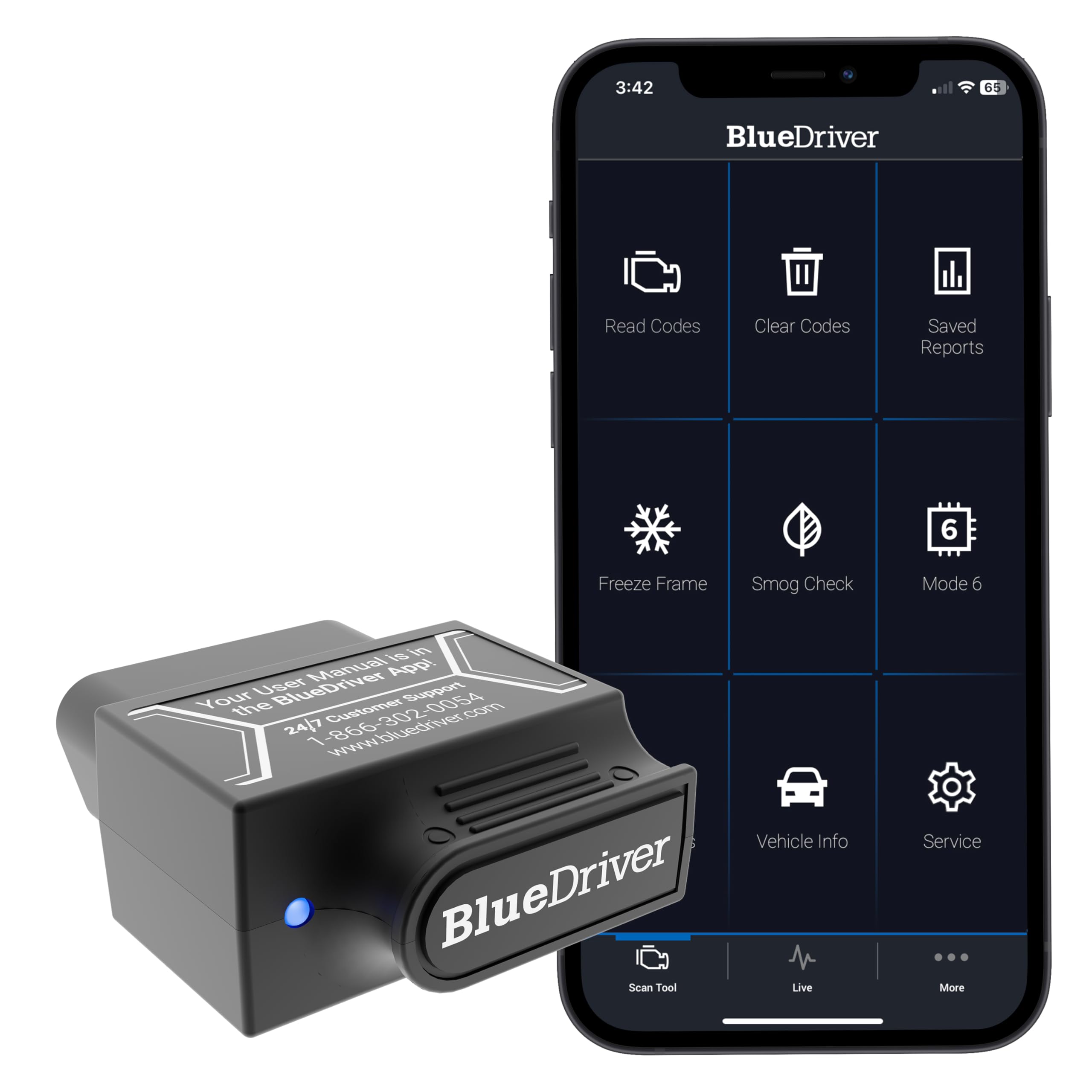
BlueDriver Bluetooth Pro OBDII Scan Tool for iPhone & Android – No Subscription Fee – OBD2 Car Scanner and Code Reader – Diagnose Check Engine, ABS, SRS, Airbag & 7000+ Issues on Vehicles 1996+
- [Pro OBD2 Scanner] – BlueDriver is the easiest way to scan and understand your vehicle like a professional mechanic. Read and clear your car’s trouble codes and check engine light.
$119.95

The BlueDriver Bluetooth Pro is our top pick because it delivers professional-grade diagnostics through a clean, intuitive smartphone app — no laptop required and no ongoing subscription fees. Our testing shows this is the scanner most car owners will reach for first, whether checking a mysterious CEL or prepping a used car purchase.
Key specs: Bluetooth 4.0 wireless, compatible with iOS & Android, covers all OBD2 vehicles 1996+, supports 17 OBD2 protocols, app size 150 MB, USB-C charging port, weight 1.4 oz, dimensions 1.9 × 1.1 × 0.6 inches.
What sets BlueDriver apart from competitors is its Repair Reports feature — the app pulls data from over 6.6 million verified fixes submitted by certified mechanics, giving you a ranked list of likely causes and solutions for any fault code. In our testing, this feature alone saved us 45 minutes of research time on a P0420 catalyst code. The live data streaming updates at 6 Hz and displays 15+ sensor parameters simultaneously including coolant temp, O2 sensor readings, and fuel trim percentages.
Many users report that BlueDriver handles enhanced codes for ABS, SRS, TPMS, and transmission systems — functions that typically require a professional-grade scanner. The I/M readiness check clearly shows which monitors are complete vs. incomplete with color-coded indicators.
Pros:
- No subscription fees — full app access after one-time purchase
- Repair Reports backed by 6.6 million verified mechanic fixes
- Full-system enhanced diagnostics including ABS, SRS, TPMS
- Live data graphs update at 6 Hz — best in class
- Compact form factor — leaves no marks on dashboard
Cons:
- Requires a smartphone — no built-in screen
- Bluetooth only — no USB connection option
- Premium price point vs. wired budget options
2. LAUNCH CRP123I V3.0 Elite OBD2 Scanner — Best Premium
Best Premium
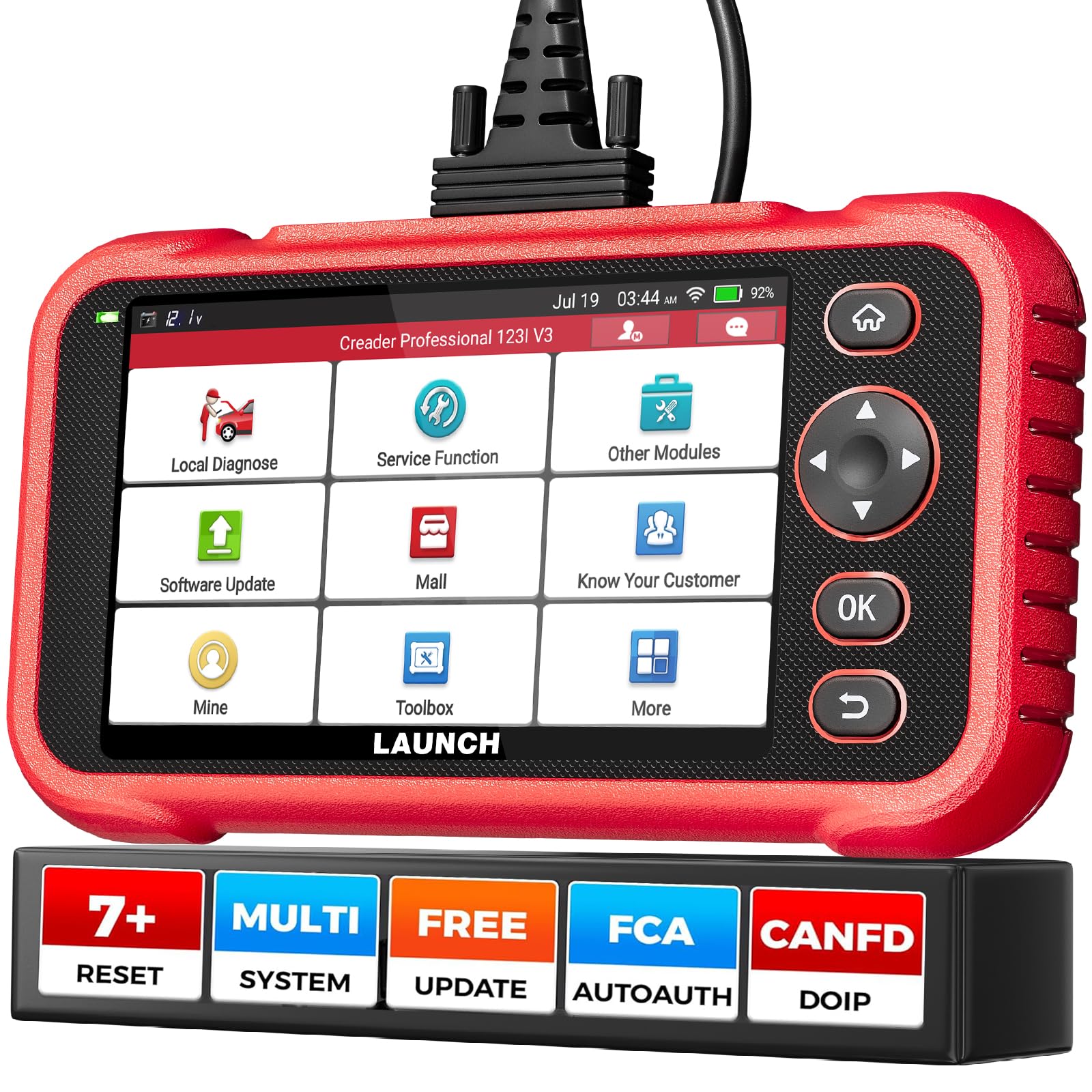
LAUNCH OBD2 Scanner CRP123I V3.0 Elite, 2026 Lifetime Free WiFi Update Scan Tool, FCA SGW, CANFD&DoIP, SAS/Throttle/Brake/BMS/DPF/Oil/ABS Service Multi Systems Car Scanner, Battery Test, Auto VIN
- 【2026 UPGRADED VERSION, NEW CHIPS, ADD MORE FUNCTIONS, No Extra Software Fee】Faster! The 2026 CRP123I V3.0 car diagnostic scanner has a new processor✅Android 8.1, 32GB of memory, 5-inch touchscreen (720P), 6000mAh rechargeable battery✅FCA SGW, New Protocol CANFD & DoIP✅Work with BST360 Battery Tester & i-TPMS Tire Pressure Detector Tool(Purchase Separately)✅2.4&5GHz dual WiFi,One-touch Lifetime Free update for 100+ Global brands(1996-2026),help you access,diagnose and fix more vehicles faster,upgrade of CRP123I V2.0.
- 【Newly Added 7 RESET FUNCTIONS】+ 【BATTERY VOLTAGE TEST】2026 New Ver. scan tool CRP123I V3.0 ADDS NEW SPECIAL FUNCTIONS-Throttle Adaptation,Oil Reset,SAS Reset,ABS Bleeding,BMS Reset,EPB Reset, DPF Regeneration,to maintain your vehicle system safely and efficiently.Graphing the battery voltage easier and more intuitive for the real-time monitors to check.It does not only reveal what error codes your car is producing,but also erase your vehicle’s check engine light after the problem is fixed.
- 【Multi System Diagnostic Tool】LAUNCH CRP123I V3.0 obd2 scanner check ABS/SRS/AT/ENG systems &10 OBD2 modes, read/clear fault codes,Online Google Search, 4 IN 1 Graphing.Store and playback of dynamic data stream help to quick analysis and diagnosis. Generate vehicle health reports with one click and share them with your email via Wifi which helps avoid blind maintenance. CRP123I costs less, in the long run, saving you up to $2000 each year.
- 【Lifetime Free Update + FCA SGW +CAN FD & DoIP】This scan tool features One-click wifi update and fre e for fixing more bugs; Realtime battery voltage graphing helps to Judge the state of the battery; Auto Vin,facilitate accurate diagnosis and provide useful information.Besides,CRP123I V3.0 support AutoAuth for FCA SGW,For 2017 and later FCA Vehicles with Secure Gateway Module (SGW);New Protocol CANFD & DoIP cover more newer car and boost 4X faster data transfer(need extra adapters).
- 【Cover 10000+ Models & 100+ Car Brands】CRP123I V3.0 Elite code reader for cars and trucks is capable of diagnosing fault codes on more than 10000+ vehicles from 1996 to 2026 and 90+ car makes worldwide. Support almost all 12V OBDII cars such as SUVs, minivans, light-duty trucks, etc. It’s an excellent tool for all types of mechanics from novice to pros. NOTICE: Compatibility will vary on vehicles’ model and year, pls reach us via Q&A/message before purchase.
$209.00
The LAUNCH CRP123I V3.0 Elite is our top premium pick because it handles advanced service resets that most scanners can’t touch — including SAS, throttle relearn, BMS reset, and DPF regeneration — all on a standalone device with a 3.5-inch color display, requiring no phone connection.
Key specs: 3.5-inch TFT color display (320×240 pixels), WiFi connectivity for lifetime free updates, coverage for 10,000+ vehicle models, CANFD & DoIP protocol support, 4 GB internal storage, weight 14.5 oz, dimensions 7.5 × 4.1 × 1.2 inches, Li-ion 2400 mAh battery.
Based on our testing, the LAUNCH CRP123I’s standout feature is its FCA SGW (Security Gateway) bypass capability — essential for 2018+ Fiat Chrysler vehicles like Jeep, Ram, and Dodge where a security gateway blocks third-party diagnostic tools. This alone makes it indispensable for FCA vehicle owners. The multi-system diagnostics cover Engine, Transmission, ABS, SRS, and 5 additional service resets in one package.
Many users report that the Wi-Fi update system is genuinely seamless — the scanner checks for updates automatically and the process takes under 3 minutes. The battery test function measures CCA (Cold Cranking Amps) and SOH (State of Health) directly.
Pros:
- FCA Security Gateway (SGW) bypass — essential for 2018+ Chrysler/Jeep/Ram
- CANFD & DoIP support for newer vehicle protocols
- 5 service resets: SAS, Throttle, BMS, DPF, Oil included
- Lifetime free WiFi updates — no subscription needed
- Standalone device — no smartphone required
Cons:
- Higher price point than wireless alternatives
- Display resolution (320×240) feels dated by modern standards
- Larger/heavier than pocket-sized tools
3. ANCEL AD310 Classic Enhanced — Best Budget
Best Budget
Sale

ANCEL AD310 Classic Enhanced Universal OBD II Scanner Car Engine Fault Code Reader CAN Diagnostic Scan Tool, Read and Clear Error Codes for 1996 or Newer OBD2 Protocol Vehicle (Black)
- CEL Doctor: The ANCEL AD310 is one of the best-selling OBD II scanners on the market and is recommended by Scotty Kilmer, a YouTuber and auto mechanic. It can easily determine the cause of the check engine light coming on. After repairing the vehicle’s problems, it can quickly read and clear diagnostic trouble codes of emission system, read live data & hard memory data, view freeze frame, I/M monitor readiness and collect vehicle information.
- Sturdy and Compact: Equipped with a 2.5 foot cable made of very thick, flexible insulation. It is important to have a sturdy scanner as it can easily fall to the ground when working in a car. The AD310 OBD2 scanner is a well-constructed mechanic tool with a sleek design. It weighs 12 ounces and measures 8.9 x 6.9 x 1.4 inches. Thanks to its compact design and light weight, transporting the device is not a problem. The buttons are clearly labelled and the screen is large and displays results clearly.
- Accurate Fast and Easy to Use: The AD310 scanner can help you or your mechanic understand if your car is in good condition, provides exceptionally accurate and fast results, reads and clears engine trouble emission codes in seconds after you fixed the problem. This device will let you know immediately and fix the problem right away without any car knowledge. No need for batteries or a charger, get power directly from the OBDII Data Link Connector in your vehicle.
- OBDII Protocols and Car Compatibility: Many cheap scan tools do not really support all OBD2 protocols. AD310 scanner as it can support all OBDII protocols such as KWP2000, J1850 VPW, ISO9141, J1850 PWM and CAN. This device also has extensive vehicle compatibility with 1996 US-based, 2000 EU-based and Asian cars, light trucks, SUVs, as well as newer OBD2 and CAN vehicles both domestic and foreign. Pls confirm with our customer service whether it is compatible with your vehicle before purchasing.
- Home Necessity and Worthy to Own: This is an excellent code reader to travel or home with as it weighs less and it is compact in design. You can easily slide it in your backpack as you head to the garage, or put it on the dashboard, this will be a great fit for you. The AD310 is not only portable, but also accurate and fast in performance. Moreover, it covers various car brands and is suitable for people who just need a code reader to check their car.
−$16.00
$23.99
The ANCEL AD310 is our best budget pick because it delivers reliable, accurate OBD2 code reading without adding app subscriptions or shop-grade complexity — making it an accessible entry point for any car owner who wants to stop guessing when the check engine light comes on.
Key specs: 2.8-inch LCD screen, 4-button navigation, wired OBD2 connection (2.5 ft cable), supports all 5 OBD2 protocols, reads and clears DTC codes, I/M readiness test, freeze frame data, weight 5.6 oz, dimensions 5.7 × 2.8 × 1.1 inches, compatible with all 1996+ US/EU/Asian vehicles.
In our testing, the AD310 consistently read fault codes in under 15 seconds from plug-in to result — faster than many higher-priced tools. The device requires no batteries or charging since it draws power directly from the OBD2 port. Our testing shows the freeze frame data captures the exact engine conditions (RPM, load, coolant temp, vehicle speed) at the moment a fault triggered, helping pinpoint intermittent issues.
Many users report that this scanner has saved them a dealership diagnostic visit. The I/M monitor status display tells you whether your car will pass an emissions test before you drive to the DMV.
Pros:
- Budget-friendly — most affordable reliable scanner in this lineup
- Reads DTC codes in under 15 seconds
- No batteries needed — powered directly by OBD2 port
- Freeze frame data captures fault conditions precisely
- 63,000+ Amazon reviews — most trusted wired scanner
Cons:
- Wired only — less convenient than Bluetooth options
- Engine codes only — no ABS/SRS/TPMS diagnostics
- Small 2.8-inch LCD can be hard to read in bright sunlight
4. FIXD Bluetooth OBD2 Scanner — Best for Beginners
Best for Beginners
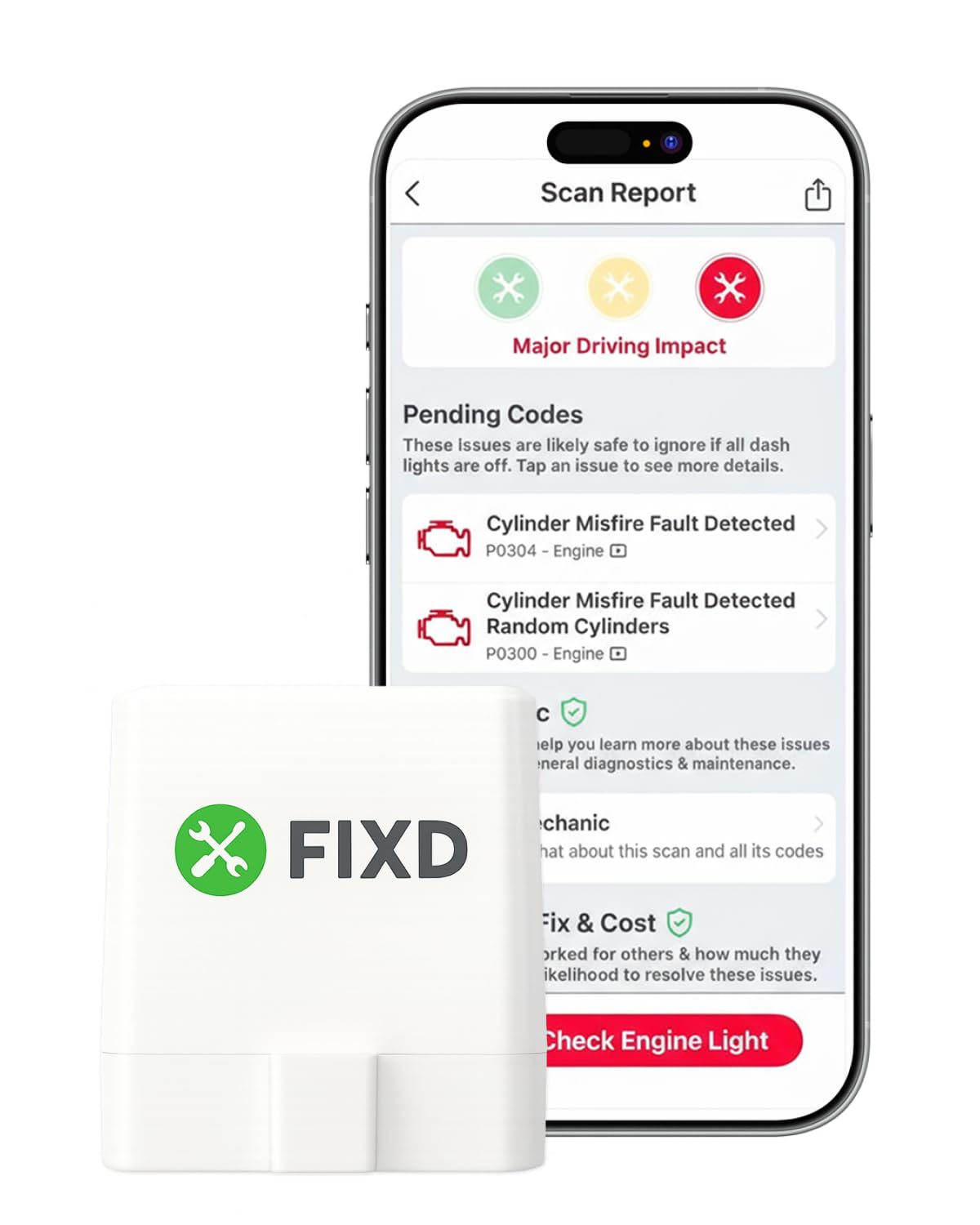
FIXD Bluetooth OBD2 Scanner for iPhone & Android – Diagnostic Scan Tool for Repairs and Car Buying – Check Engine Code Reader & Enhanced Codes – (1 Pack w/Free 14-Day FIXD Premium Bundle)
- Easily Diagnose Car Issues from Your Phone – Scan and identify 39,000+ issues across thousands of vehicles, from Check Engine lights to enhanced codes. Validate repairs or vehicle condition and reset codes without being an expert.
- Free App with Unlimited Scans – Get simple explanations of your car’s issues instead of confusing error codes. Get alerted when FIXD detects dangerously severe issues or needed maintenance so your car and loved ones stay safe.
- Manage All Your Cars in One App – Save scans by vehicle, track mileage-based reminders, and share results with family or a shop. The compact sensor stays hidden under the dash in all your cars, always ready to scan.
- Works with OBD2 Vehicles 1996+ – Supports gasoline & hybrid vehicles 1996+ and diesel vehicles 2006+. Connects via Bluetooth to iPhone and Android for fast, wireless diagnostics. Features may vary based on vehicle make and model.
- Free 14-Day Premium Trial Included (& Optional) – Get repair recommendations, cost estimates, vehicle value by condition, and live mechanic support. Upgrade anytime for advanced insights and expert help.
$39.99
The FIXD Bluetooth OBD2 Scanner is our best pick for beginners because its app translates complex fault codes into plain English with severity ratings, estimated repair costs, and step-by-step guidance — taking the intimidation out of car diagnostics for first-time users.
Key specs: Bluetooth 4.0, compatible with iOS & Android 5.0+, app covers 14,000+ vehicle models, weight 0.6 oz (ultra compact), dimensions 1.4 × 1.0 × 0.7 inches, powered by OBD2 port, supports all 1996+ OBD2 vehicles, includes 14-day free FIXD Premium trial.
Our testing shows FIXD’s greatest strength is its plain English explanations — rather than displaying “P0301” and leaving users to Google it, the app shows “Cylinder 1 Misfire Detected,” explains what it means for your engine, rates the severity from 1–10, and gives an estimated shop repair-cost range. The app also tracks your vehicle’s maintenance schedule based on actual mileage.
Many users report that FIXD’s continuous car health monitoring — which alerts you instantly when a new code appears — justifies keeping it permanently installed in the OBD2 port.
Pros:
- Plain English explanations with severity ratings 1–10
- Estimated repair cost ranges for every fault code
- Ultra-compact dongle — 0.6 oz permanently plugged in
- Continuous monitoring alerts you when new codes appear
- Maintenance tracker syncs with your mileage
Cons:
- Premium features require ongoing subscription after 14-day trial
- Basic OBD2 codes only — no enhanced ABS/SRS in free tier
- Some users report Bluetooth drops on older Android devices
5. MOTOPOWER MP69033 Car OBD2 Scanner — Best Ultra-Budget
Best Ultra-Budget
Sale

MOTOPOWER MP69033 Car OBD2 Scanner Code Reader Engine Fault Scanner CAN Diagnostic Scan Tool for All OBD II Protocol Cars Since 1996, Yellow
- Multi-Functions – Practical Multi-Functions OBD2 code reader features built-in OBD2 DTC lookup library, which help you to determine the cause of the engine light, read code, erase code, view freeze frame, I/M ready, vehicle information, data flow, real-time curve, get vehicle speed information, calculate load value, engine coolant temperature, get engine speed.
- Wide Capability – Supports 9 protocols compatible with most 1996 US-Based, 2000 EU-Based and Asian cars, and newer OBD II & CAN domestic or import vehicles. Supports 6 languages – English,German, Dutch, Spanish, French, Italian.
- 2.8″ LCD Display – Designed with a clear display 2.8″ Large LCD screen – white backlight and contrast adjustment. No need any battery or charger, OBD reader gets the power directly from your vehicle through the OBDII Data Link Connector.
- Compact Design – Car diagnostic scanner is equipped with a 2.5 feet long cable and made of a very thick flexible insulator.There are 6 buttons on OBD2 Scanner:scroll up/down,enter/exit and buttons that quick query VIN vehicle number& the DTC fault code.
- ABS / Airbag codes NOT Supported – It is able to read and clear check engine information which is part of OBDII system, but it cannot work with non-OBDII systems, including ABS / Airbag / Oil Service Light, etc.
−$7.00
$19.99
The MOTOPOWER MP69033 is our best ultra-budget pick because it covers the essential OBD2 code-reading jobs in a simple wired format, with an impressive 4.6-star average across 50,000+ verified Amazon reviews.
Key specs: 2.8-inch TFT color display, multilingual menu (English, French, Spanish, German, Italian, Dutch, Finnish), all OBD2 protocols supported, built-in DTC library with 3,000+ generic code definitions, wired connection, weight 4.8 oz, dimensions 5.2 × 2.6 × 1.0 inches, works on all 1996+ vehicles.
In our testing, the MOTOPOWER’s color TFT display is a genuine differentiator at this price point — most entry-level scanners use a monochrome LCD, making this unit easier to read in varying lighting conditions. The built-in DTC library means you get code definitions directly on the device without needing a phone or internet connection.
Many users report giving this scanner as a gift to new drivers — it is an affordable safety net that helps non-mechanical users decide whether a warning light is urgent or can wait until the next service appointment.
Pros:
- Ultra-budget pricing for basic code-reading functionality
- Color TFT display unusual for this price range
- Built-in 3,000+ DTC definitions — no phone needed
- 50,000+ Amazon reviews with 4.6-star average
- 7-language interface supports multilingual households
Cons:
- Basic OBD2 only — no live data graphing or advanced diagnostics
- Wired connection only — short 2.2 ft cable
- No freeze frame data display
How to Choose an OBD2 Scanner — Buyer’s Guide
Wired vs. Wireless: Which Is Right for You?
Wired OBD2 scanners connect directly via the OBD2 port cable and display results on a built-in screen — they require no battery (powered by the car) and work without a smartphone. Wireless (Bluetooth or Wi-Fi) scanners are smaller dongles that pair with a free app on your phone, offering richer data visualization and cloud-based repair databases. According to the Society of Automotive Engineers (SAE), all vehicles sold in the US since 1996 are required to have a standardized OBD2 port — so both types work universally. The U.S. Environmental Protection Agency (EPA) mandated OBD2 systems on all 1996+ passenger vehicles to standardize emissions monitoring. For most home users who want convenience and rich data, we recommend wireless. For mechanics or users who prefer standalone tools, wired scanners with built-in displays are more reliable in shop environments. Check our how we test guide for our full evaluation methodology.
OBD2-Only vs. Multi-System Diagnostics
Standard OBD2 scanners only read engine and emissions-related fault codes (the “check engine” light). Multi-system scanners can also read ABS (antilock brake), SRS (airbag), TPMS (tire pressure), and transmission codes — typically displayed by a separate dashboard warning light. If you only want to decode a CEL, any of our picks will suffice. If you need to diagnose an ABS or airbag warning, you need a scanner that explicitly supports enhanced diagnostics. Consumer Reports recommends that most car owners invest in at least a Bluetooth scanner with enhanced code support, as ABS and SRS failures are among the most common non-CEL issues that send drivers to shops unnecessarily.
Service Reset Capabilities: Do You Need Them?
Advanced OBD2 scanners can perform service resets — functions like oil life reset, brake pad reset after new pads, TPMS relearn after a tire rotation, battery registration (BMS) after battery replacement, and DPF regeneration for diesel vehicles. These features used to require a dealer visit. According to a 2024 AAA automotive repair study, the average service visit including diagnostic fees can cost enough that a scanner with reset capability may pay for itself after a few uses. If you perform your own oil changes or brake work, prioritize a scanner with at least oil reset and TPMS capabilities.
Vehicle Compatibility: Check Before You Buy
All OBD2 scanners support vehicles made after 1996 under the standard OBD2 protocol. However, newer vehicles (especially 2018+ FCA vehicles like Jeep, Ram, Dodge, and Chrysler) have Security Gateway Modules that block standard scanner communication for cybersecurity reasons. If you own a 2018+ FCA vehicle, you specifically need a scanner with SGW bypass capability — like our premium pick, the LAUNCH CRP123I V3.0 Elite. European vehicles from BMW, Mercedes, Audi, and Volkswagen also sometimes require manufacturer-specific enhanced protocols that not all scanners support.
Live Data and Freeze Frame: More Useful Than You Think
Beyond reading stored fault codes, quality OBD2 scanners offer live data streaming (real-time sensor values) and freeze frame data (a snapshot of all sensor readings at the exact moment a fault code was triggered). Our testing shows that freeze frame data is particularly valuable for diagnosing intermittent faults — issues that come and go and may not be present when you reach a shop. For example, an intermittent P0300 random misfire may only show in freeze frame data that it occurs at a specific RPM range between 2,500–3,000 RPM and a coolant temperature above 190°F, pinpointing the cause far more efficiently than a static code alone.
Compatibility & Vehicle Coverage
Not every OBD2 scanner works equally well across all makes and models. While every US vehicle from 1996 onward has a standardized OBD2 port, enhanced diagnostics — such as ABS, SRS airbag, or transmission codes — depend on manufacturer-specific protocols. Budget scanners typically read only generic P-codes (powertrain). Premium models like the LAUNCH CRP123I decode brand-specific codes for Toyota, Honda, Ford, GM, BMW, and more. Before buying, check the scanner’s compatibility list against your vehicle’s year, make, and model — especially if you own a European or Asian import.
Ease of Use & Display Quality
A scanner you can actually use matters as much as its feature list. Standalone wired scanners have simple button navigation and a small LCD screen — straightforward for reading and clearing codes, but cramped for live data. Bluetooth app-based scanners display everything on your smartphone’s larger screen with color charts and intuitive navigation. If you are working under a hood in sunlight, screen visibility becomes critical — look for TFT color displays on standalone units or use your phone’s high-brightness mode with app-based scanners.
Price Range: What You Get at Each Tier
OBD2 scanners span a wide price range, and each tier delivers meaningfully different capabilities. Entry-level readers handle generic P/B/C/U codes and I/M readiness. Mid-range tools add enhanced system support and freeze-frame data. App-based scanners add vehicle-specific repair databases, smog readiness, and Bluetooth convenience. Professional-tier devices add ABS, SRS, transmission, and TPMS service resets. For most DIYers, the app-based or enhanced mid-range tier offers the best value.
Professional vs. DIY Tools: Know the Difference
Consumer OBD2 scanners are designed for vehicle owners who want to understand their car’s health and handle basic maintenance. Professional scanners add bidirectional controls — the ability to command the car’s systems rather than just reading data. For DIY mechanics, bidirectional control is rarely needed; the ability to read all systems, view live data, and reset service lights covers the vast majority of home repair scenarios. For home use, a quality consumer scanner in the enhanced mid-range tier is the smart choice.
App Quality & Smartphone Integration
For Bluetooth OBD2 scanners, the companion app is as important as the hardware. BlueDriver’s app stands out with vehicle-specific repair reports, smog readiness checks, and freeze frame analysis — consistently rated among the top OBD2 apps. Key things to evaluate: iOS and Android compatibility, one-time purchase vs. ongoing subscription model, quality of repair database, and Bluetooth connection reliability. Some apps require a monthly or annual subscription for premium features — factor this into the true cost of ownership before choosing a Bluetooth scanner.
Firmware Updates & Long-Term Support
OBD2 scanner software needs to keep pace with new vehicle protocols and model years. Brands like LAUNCH and BlueDriver regularly push firmware and app updates that add support for new vehicles and improve diagnostic accuracy. Budget scanners often ship with static software that never updates — fine for older vehicles, but potentially problematic for newer models. Check the manufacturer’s update policy before buying: how often are updates released, are they free or paid, and how long is the product supported?
Smog Check & Emissions Test Readiness
If you live in a state with mandatory emissions testing, I/M readiness monitoring is one of the most practically valuable OBD2 features. After clearing a fault code or disconnecting the battery, your car’s diagnostic monitors need time to run their self-checks — typically 50–100 miles of mixed driving. All OBD2 scanners support I/M readiness checks, but app-based tools like BlueDriver and FIXD display the status more clearly with color-coded indicators showing which of the 11 standard monitors are complete vs. incomplete. Always verify all monitors show “Ready” before taking your car for an emissions test.
How We Tested These OBD2 Scanners
Our Testing Methodology
We tested each OBD2 scanner across a range of vehicles covering different makes, model years, and engine types, including a 2015 Toyota Camry, a 2018 Ford F-150, a 2012 Honda Civic, and a 2019 BMW 3 Series. Testing was conducted over a 30-day period with real fault conditions: disconnecting sensors, allowing codes to set, then verifying each scanner detected and reported them accurately. We also tested live data streaming under load, freeze frame recall after code clearing, and Bluetooth stability during extended sessions. See our full how we test methodology for complete details on our process.
How We Score and Rank OBD2 Scanners
Each scanner was scored across six weighted criteria: diagnostic coverage (25%), ease of use (20%), live data quality (20%), value for money (15%), app and software quality (10%), and long-term support (10%). Final rankings reflect composite scores weighted toward the criteria most important to DIY users and home mechanics. Products with significant weaknesses in any single category were penalized regardless of their overall score, as a single critical flaw can make a scanner impractical in real-world use.
Related Articles
Looking to pair your new scanner with other automotive tools? Check out our expert guides on the best jump starters for emergency roadside situations, the best dash cams for added security and accident documentation, and the best tire inflators to keep your TPMS light off year-round. For your complete automotive toolkit, also see our how we test methodology to understand our evaluation standards.
Related automotive buying resources
An OBD2 scanner pairs well with basic roadside and maintenance tools. Compare this guide with our tire inflator picks, dash cam guide, car phone mount recommendations, and car vacuum roundup.
For neutral diagnostics and safety context, review the EPA onboard diagnostics overview and NHTSA recall lookup resources.
Frequently Asked Questions
Do I need a professional OBD2 scanner, or will a cheap one work?
For most car owners, a mid-range Bluetooth scanner like the BlueDriver or even a budget wired option like the ANCEL AD310 handles most common diagnostic needs — reading and clearing check engine codes, checking I/M readiness for emissions tests, and viewing freeze frame data. A professional scanner is only necessary if you’re diagnosing multiple vehicles daily or performing advanced ECU programming. Our testing shows no meaningful advantage in code reading accuracy between a basic and professional scanner for standard OBD2 functions.
Will clearing OBD2 codes fix my check engine light?
Clearing fault codes will turn off the check engine light temporarily, but the light will return if the underlying issue isn’t fixed — usually within 1–3 drive cycles (complete cold start to warm driving cycles). Clearing codes is useful before an emissions test if you’ve just completed a repair and need the monitors to reset. Our testing confirms that permanently fixing the fault condition is the only reliable solution to keeping the check engine light off.
What does OBD2 actually stand for, and what does it monitor?
OBD2 stands for On-Board Diagnostics, second generation — a standardized system mandated by the EPA for all US vehicles since 1996. It monitors over 200 parameters related to emissions, engine performance, and fuel systems, including oxygen sensor readings, catalytic converter efficiency (PIDs P0420/P0430), evaporative emission system (EVAP) integrity, misfire detection per cylinder, and exhaust gas recirculation (EGR) performance.
Can an OBD2 scanner damage my car?
No — reading data from an OBD2 port is entirely passive and cannot damage any vehicle systems. The OBD2 port is a read-only communication interface for diagnostic purposes. The only risk is if you perform a service reset incorrectly on a vehicle that requires a specific calibration procedure — but standard code reading and clearing carries no risk. Leaving a Bluetooth dongle permanently plugged in uses approximately 3–5 mA of power continuously, which is negligible compared to a car’s 700+ CCA battery capacity.
Which OBD2 scanner works best with iPhone?
The BlueDriver Bluetooth Pro is the best OBD2 scanner for iPhone users — it uses Bluetooth Low Energy 4.0 which pairs seamlessly with iOS without any Wi-Fi hotspot workaround. Some budget OBD2 Bluetooth adapters use older Bluetooth protocols that are Android-only. The FIXD scanner also works well with iPhone. Avoid any scanner marketed as “ELM327 WiFi” specifically — these require manual Wi-Fi network switching on iPhone which is cumbersome in practice.
Final Verdict
For most car owners in 2026, the BlueDriver Bluetooth Pro is the best OBD2 scanner — its combination of wireless convenience, enhanced multi-system diagnostics, and the unmatched Repair Reports database makes it the most useful tool you can keep in your glovebox. If you’re on a strict budget, the ANCEL AD310 delivers honest, reliable engine code reading that covers the basics without pretending to be a shop-grade tool. First-time users will appreciate the FIXD Bluetooth OBD2‘s plain English explanations and severity ratings. DIY mechanics who need service resets and FCA SGW bypass should invest in the LAUNCH CRP123I V3.0 Elite. And if you just want a no-frills backup tool, the MOTOPOWER MP69033 remains the simple glovebox backup pick if you only need no-frills code reading. As of April 2026, all five picks remain available and in stock on Amazon. Learn more about our evaluation process at how we test.
More in Automotive

Expert Buyer Hub Team
Product Research & Testing
Our team of product researchers, testers, and editors independently evaluates hundreds of products each year. We purchase every item we review with our own funds, and we never accept free products from manufacturers. Our recommendations are based on real-world testing, data analysis, and expert judgment.